





Should I Become a Rapids Angler?
On salmonid-rich rapids, a location-specific fishing permit is almost always required. The price can range from about ten euros to well over a hundred per day. And in some destinations, money alone won’t help if you haven’t booked your permit well in advance.
If these facts don’t put you off, rapids fishing just might be for you. It’s addictive!
In Southern Finland’s rapids, the most common catch is stocked rainbow trout – straight from the tank truck. Unfortunately, stockings have become necessary to ensure a reasonable chance of success, since not everyone is ready to practice catch-and-release fishing only. That said, rainbow trout is an excellent sport fish in its own right.
The species most passionately sought in rapids, however, is brown trout. Nowadays, landing a legal-sized specimen isn’t easy with the 50–60 cm minimum size limits. In addition, one must remember the mandatory release of wild, adipose-finned trout south of the 64th parallel, along with other possible local regulations, before giving a fish the priest.
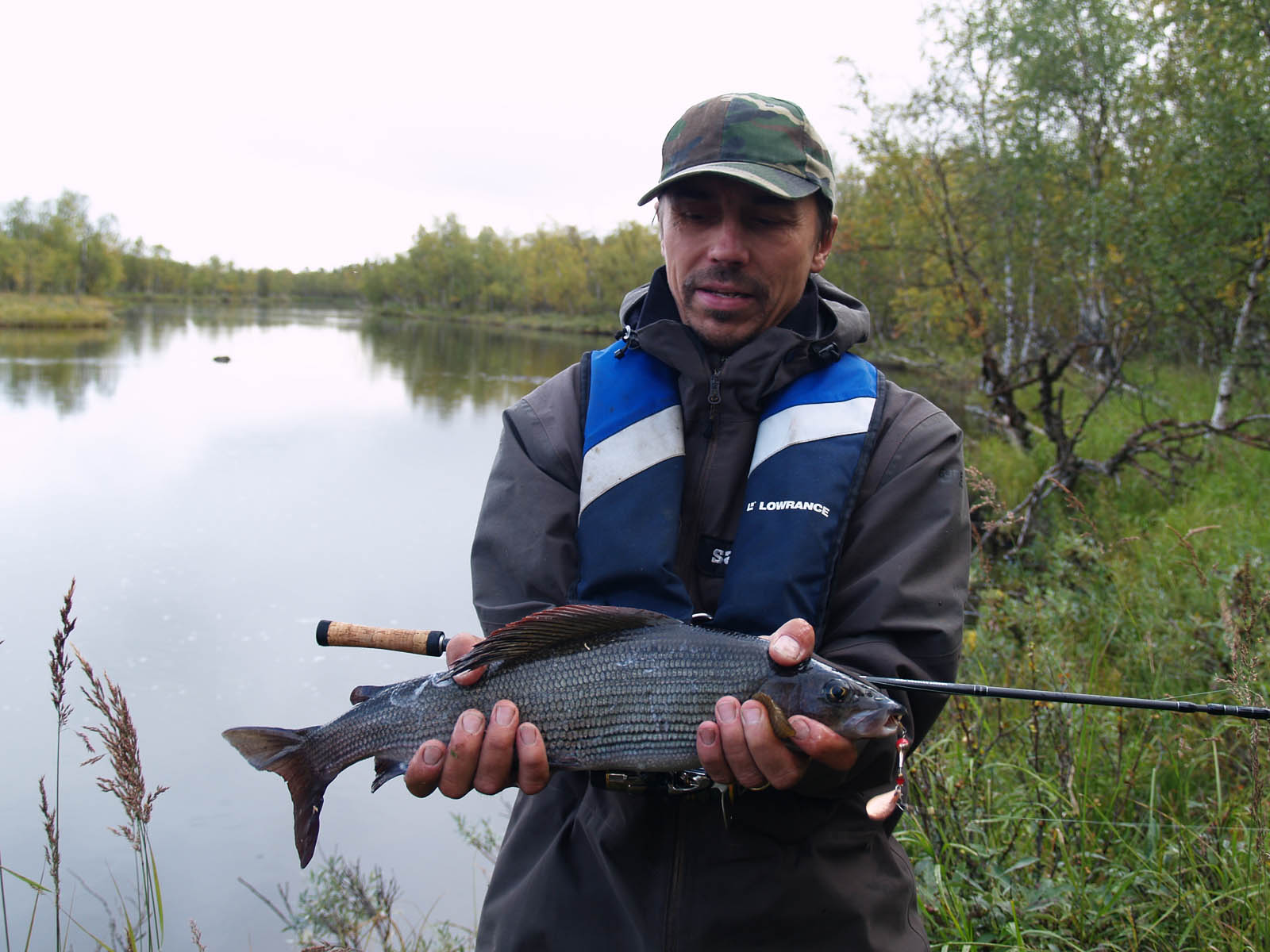
Grayling is not yet burdened by endangered status, so it may be kept for food within catch quotas, provided it exceeds the minimum size. The most productive grayling waters are found in Northern Finland, but stockings have successfully introduced the sail-finned fish to many southern streams as well.
Salmon river fishing is considered the crown jewel of rapids angling. It can be experienced in rivers such as the Kymi, Kokemäki, Simo, Tornio, and Teno—although on the Teno, lure fishing opportunities are rather limited for shore anglers.
In addition to salmonids, rapids host many other interesting species such as perch, zander, pike, asp, chub, and ide. Targeting these is often wise during hot summer days, when cold-water-loving salmonids tend to be inactive.
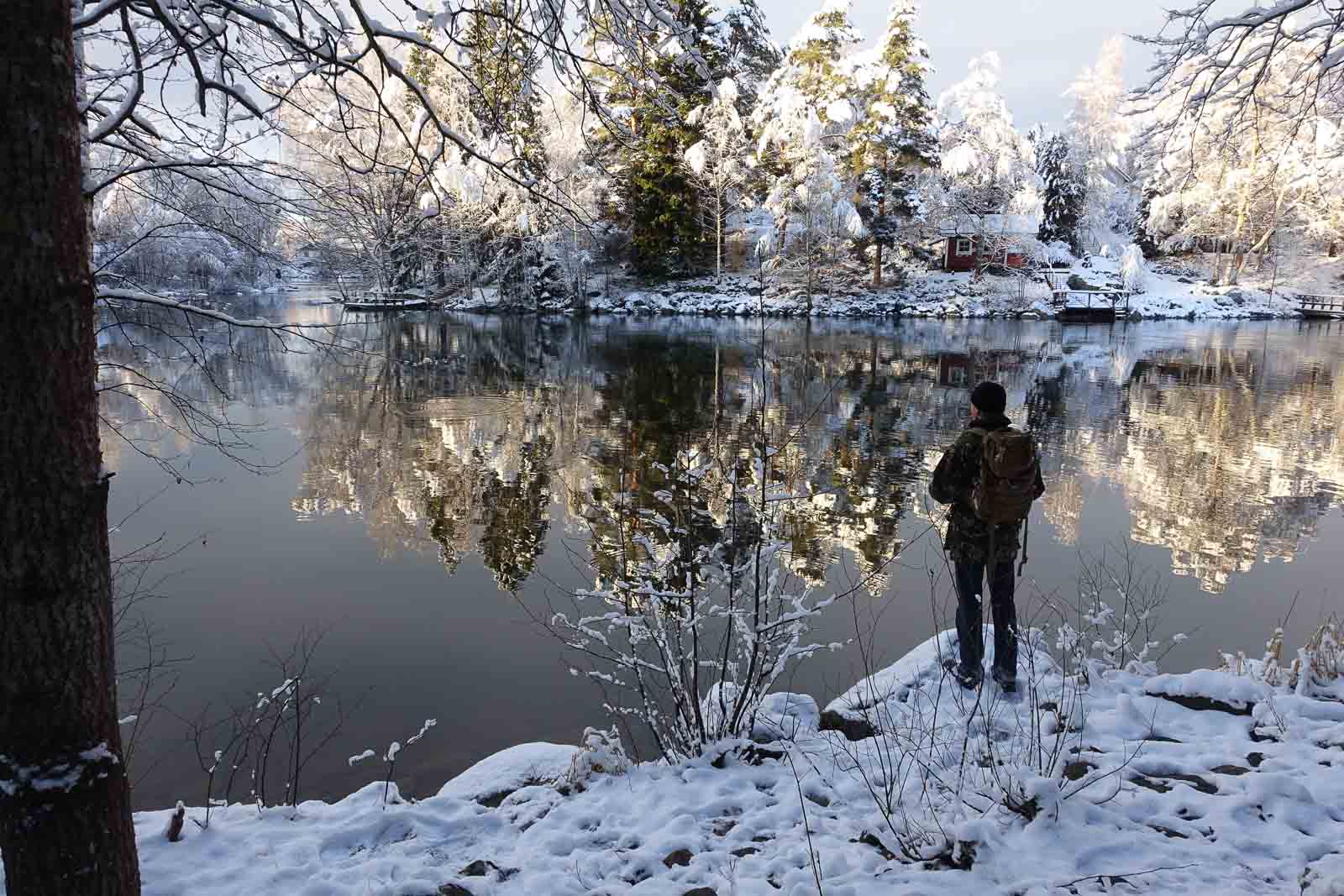
As in all fishing, success in rapids angling depends greatly on locating the fish—the so-called “holding spots.” Anglers often talk about “reading the river.”
In still waters, fish roam more or less widely in search of food. In rapids, however, a trout that finds a suitable holding position may stay within a square meter or two for days or even weeks, making only short dashes after drifting prey.
On most rapids, the majority of the water surface is “empty,” where catching a large fish is highly unlikely. Such places include shallow, boot-top riffles, where salmonid fry thrive but which responsible anglers leave undisturbed. Slow-flowing reaches and pools are also poor trout spots in warm water, unless you’re after perch, pike, or ide.
Prime lies for big salmonids, on the other hand, are the deep, fast-flowing heads of rapids, pockets and shelves, deep edge holes, the downstream side of large boulders, seams between fast mid-currents and slower margins, and the tailouts of rapids. With a bit of practice, these hot spots become fairly easy to recognize. Often, the fish themselves help by rising, splashing, or even leaping, so keep your eyes open.
If you’re not confident in your own reading skills, you can always observe what the more experienced anglers are doing—or simply ask.
Locating the fish is only the first step toward fillets sizzling in the pan. The second step is choosing the lure to tempt them with.
When selecting a lure, keep a few things in mind. Don’t choose one that dives too deep for the spot, or you may snag and lose it on the first cast. But if it runs too shallow, the fish may ignore it, especially in deep or murky water.
Often, the best choice is a lure you can swim close to the bottom without having to retrieve too quickly. The nearer it passes to a fish’s nose, the more likely a strike. That said, in clear water, even surface-skimming or splashing lures can be very effective.
Size also matters. In cold, high, and debris-filled water, larger lures tend to work better. In low, warm water with pressured, wary fish, smaller lures and finer lines are often required.
But what’s large and what’s small? Let’s compare with the ever-popular Kuusamo Räsänen spoon. The 7 cm model is already on the large side. It’s well suited to probing deep, broad runs for big trout or salmon. Recently stocked rainbows may also favor the “Räsänen Seven.”
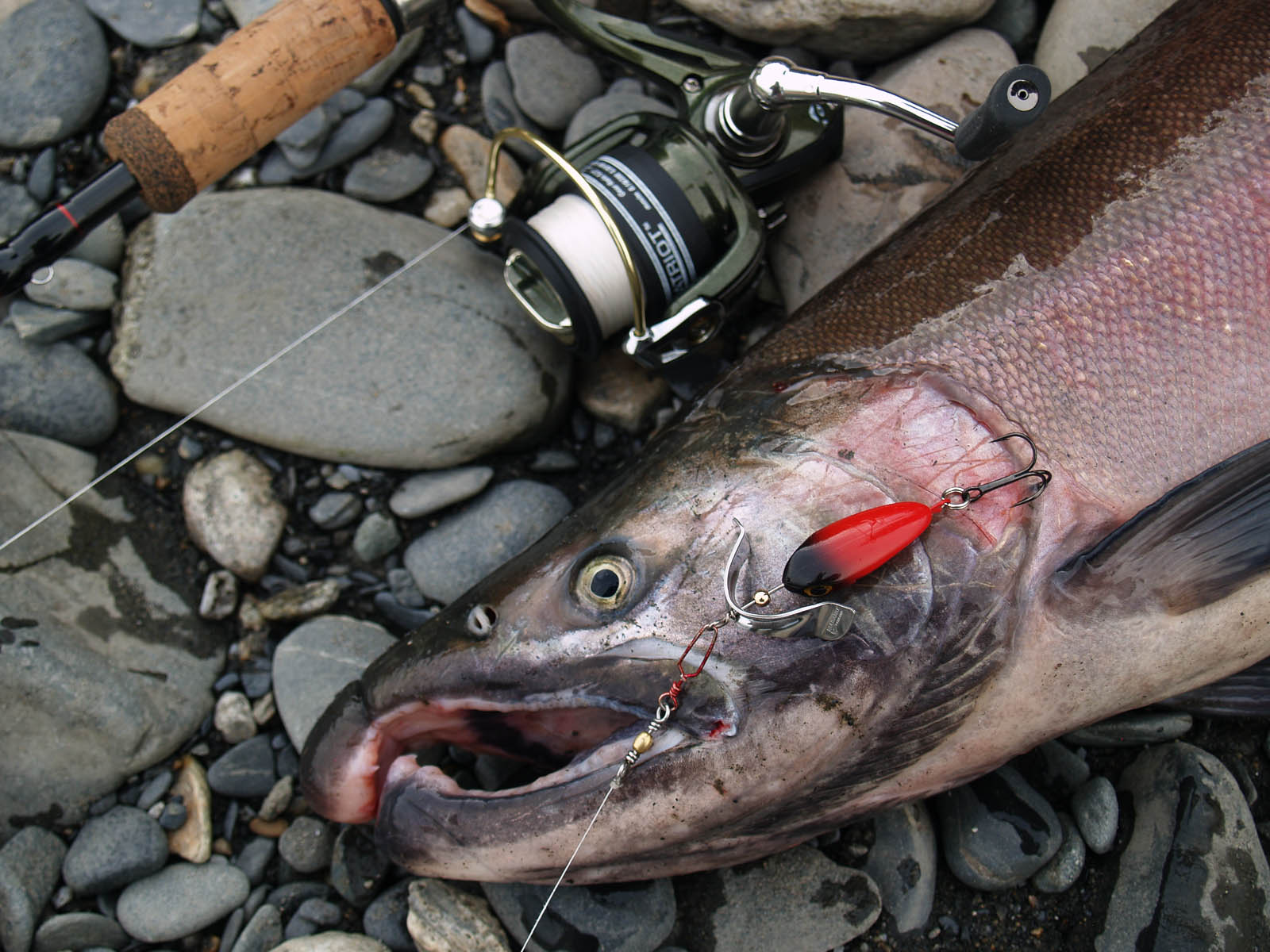
The best all-around size for rapids, however, is the 5 cm Räsänen. It works not only for salmon and trout, but also rainbow trout, Arctic char, and, in a pinch, even large grayling. If the water is low and angling pressure has made the fish cautious, the smallest 4 cm Räsänen can save the day.
Swimming action is also critical. There’s no single definition of “good action,” but if a spinner blade won’t rotate properly, a spoon spins unnaturally on its axis, or a wobbling plug rolls over on its side, your catch chances plummet.
Strong current can challenge some lures. Minnows (plugs) are the most vulnerable, while spinners and spoons usually behave more reliably. Plugs can sometimes be tuned by carefully bending the line-tie eyelet, but if that doesn’t help, such models are best saved for calmer waters.
Text and photos: Jari Tuiskunen, Fishing Expert of Erä Magazine