





Mitä siiman päähän?
Spinner, spoon or wobblers? Big or small? Elongated or plump? Strong action or subtle? Deep-diving or surface-running? Brightly colored or camouflaged?
Choosing a lure is full of questions without certain answers.
Sometimes the choice is easy. When your bank of experience has built up over years, perhaps decades, you can fairly well deduce what type of lure works in what kind of conditions. Even the color can be guessed quite accurately.
Another angler relies on the “trust lure” mindset. A certain brand has delivered catches in many situations, and you’ve learned to swim it in the best possible way. Trust in this favorite lure grows, and naturally, it gets more fishing time and therefore more results than its companions lying in the tackle box. Trust increases, and a positive cycle is born.
But if you don’t yet have such experiences, a beginner might exclaim at the sight of a huge selection of lures, like the nervous James Potkukelkka once did: “Help-meee!” You can take control of the situation by learning a little about the basics of lure selection. Here are some tips from the perspective of Kuusamo lures.
For Pike’s Teeth
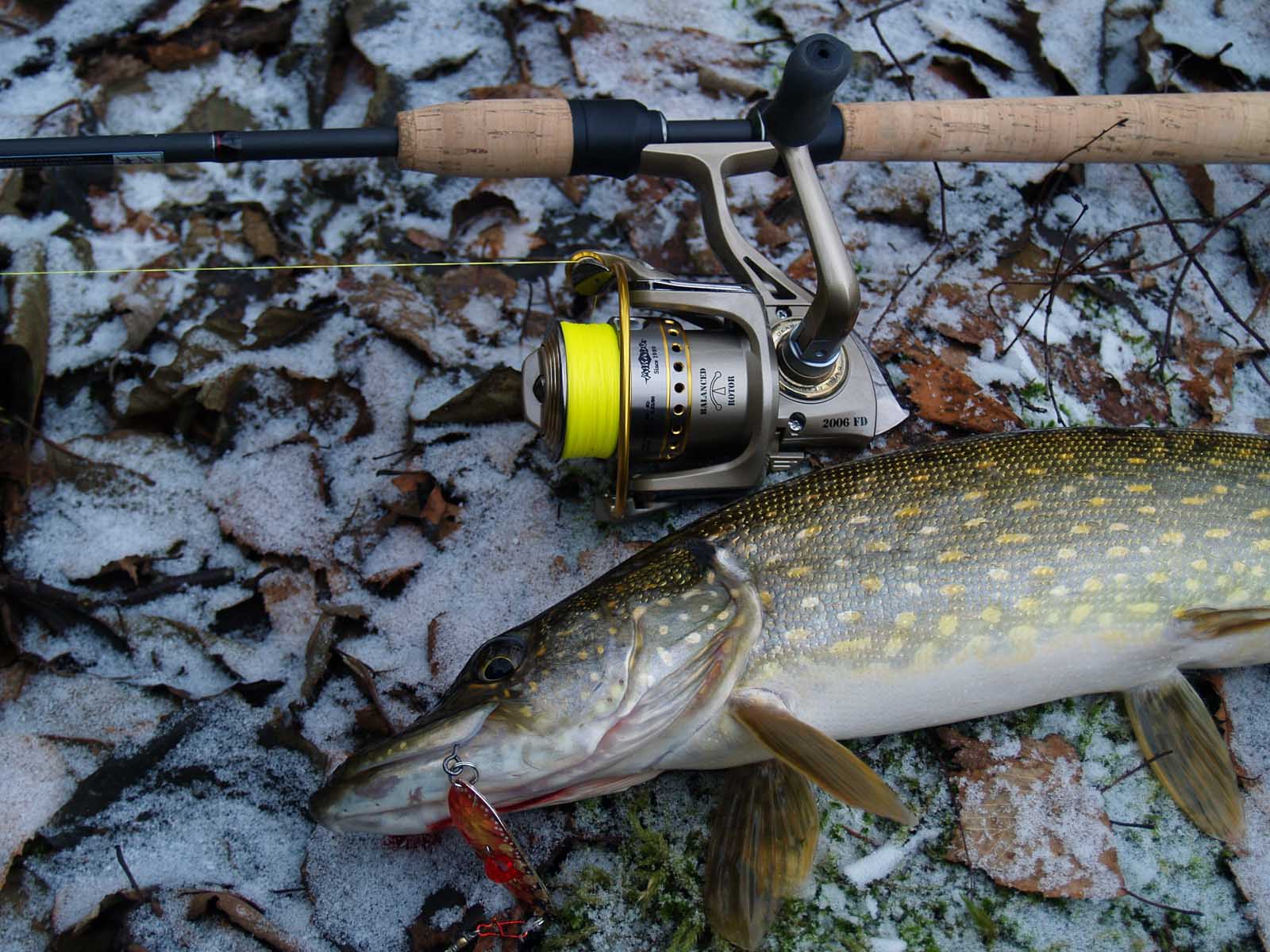
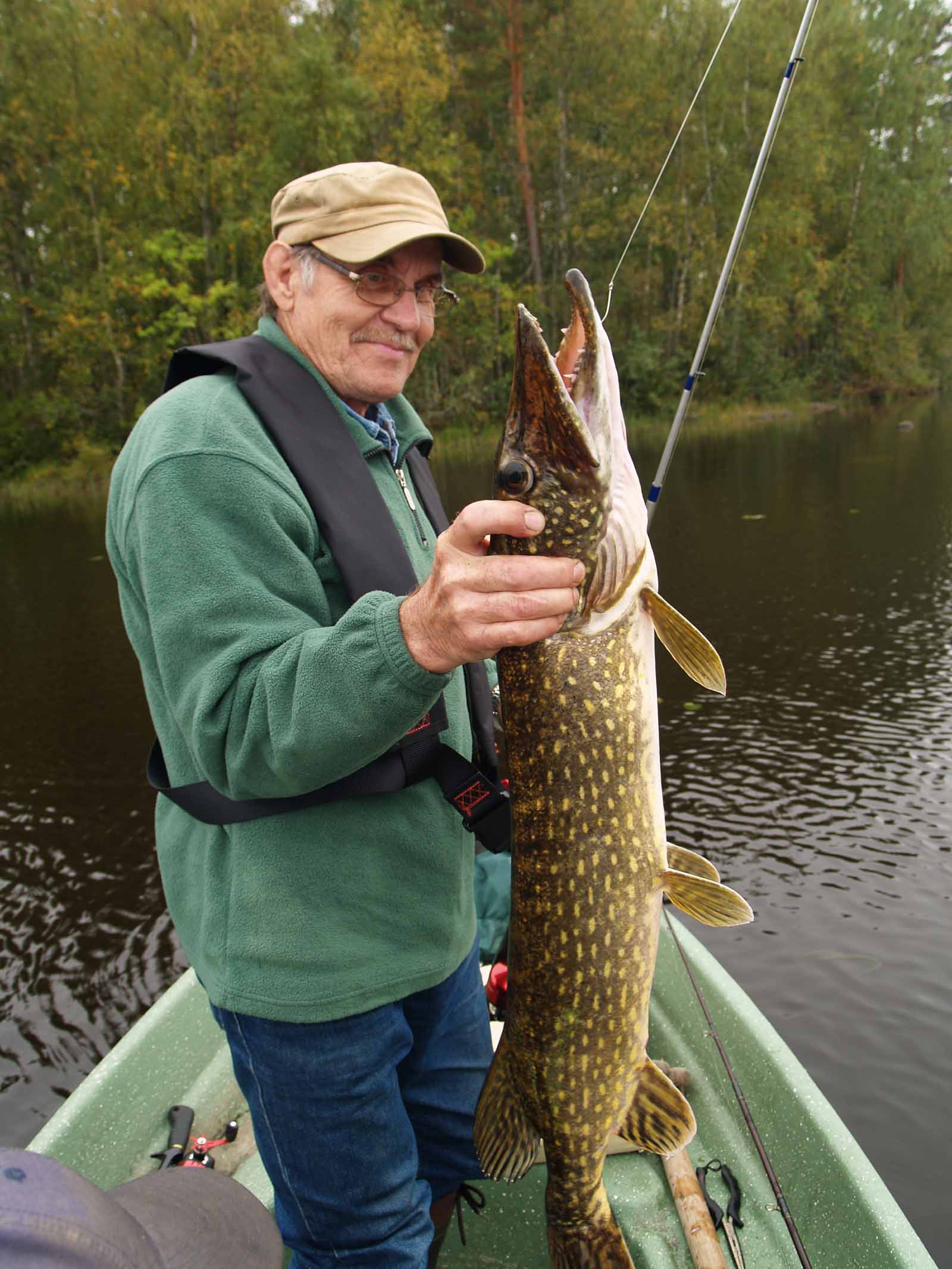
The pike is the largest-mouthed and sharpest-toothed of our fish species. Its jaws aren’t designed for sucking in plankton or aquatic insects but for big mouthfuls. Pike are said to be able to swallow prey up to half their own weight, though a more common serving is about one-tenth of their weight.
This means that, for example, a five-kilo pike easily lunches on a half-kilo “small fish,” which, depending on the species, is 30–45 cm long. In any case, much larger than any of the most common pike lures.
So, it’s not easy to offer a lure that’s too big for a pike. But it must also be said that lures over 30 cm are usually so heavy, and at least too heavy for casting, that they aren’t pleasant to fish with. It’s much more sensible to stick with somewhat smaller chew toys, even if trophy pike are your goal. And if average kilo-sized fish are enough, you’ll get them much more reliably with “normal-sized” spoons.
So? If your trip is to the coastal trophy pike waters in spring or autumn, bring large Professors. Personally, I like the 13 cm, 44 g Professor 0 best, but a truly large pike may fancy the 18 cm Professor 00 GT.
The legendary Kuusamo Puukala is an oddball among wobblers, since its swimming action doesn’t resemble the powerful, rolling kick of typical pike wobblers. Nevertheless, big-heads bite the Puukala, and in fact the lure even holds Finland’s perch record.
For inland waters, smaller lures are usually recommended. But it’s hard to find a biological basis for this, since the northern barracuda is just as greedy in freshwater as in brackish.
In lakes where big pike are common, you can certainly equip your box with the above-mentioned lures. But if you just want to catch pike in general, it’s safer to start with slightly smaller ones. Professor 2, Räsänen 70 and 90, and Hauki 80 are easy to use, proven spoons that sometimes hook big ones too. They also work in coastal waters.
Because pike like to hide in vegetation, pack a few weedless lures. Viiksi and Professor 2 weedless versions work almost like in open water among thick plants. These can also be fished safely in tricky rocky areas.
Of spinners, the Taimen, despite its name, is excellent pike food. For small forest lake pike, a trusted choice may be Paavo or Loimu spinners.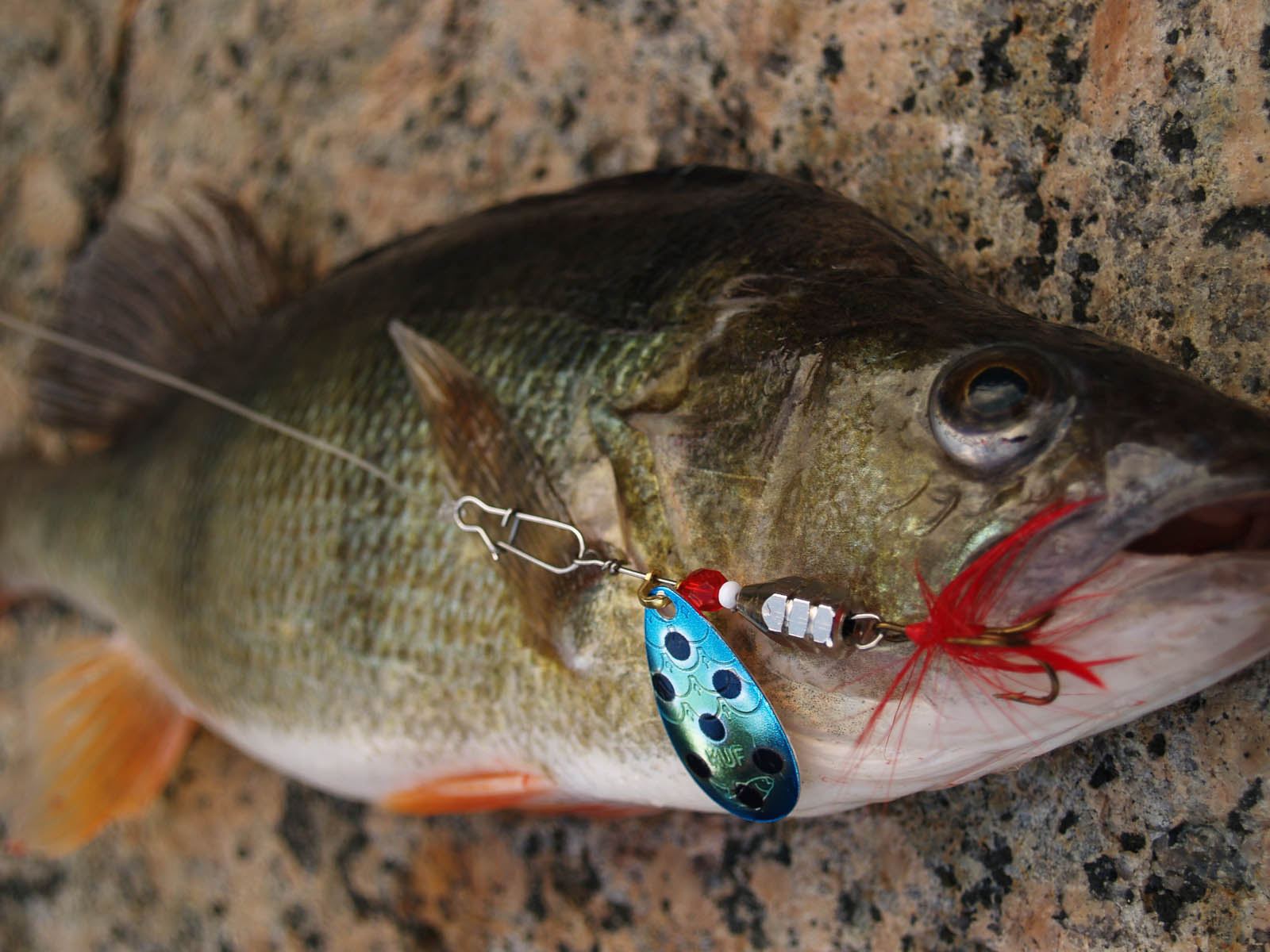
For Perch
Like the pike, perch is a predator, but its prey are much smaller fish fry—after all, the predator itself is often a small “striped one.” It’s rarely worth chasing perch with lures longer than 10 cm, but very often with ones around 4–8 cm.
Perhaps the most traditional perch harvester is a small spinner. A very easy lure type that works without any special tricks. Just retrieve calmly without rushing and the perch will bite.
Kuusamo’s Loimu, Kuf, and Paavo spinners have proven themselves excellent for perch, but for them to work, the fish must be in relatively shallow water. Beyond two meters, light spinners are hard to get down unless you add extra weight.
The most exciting perch fishing is when big humpbacks rise from the depths to chase small fish shoals near the surface. The splashing of bleak or smelt shoals first attracts gulls, then attentive anglers. A real joker in this situation is the Kuusamo plastic fish spinner, with a softbait imitating a real small fish hanging behind.
When perch stay deep, as they like to do in autumn cold, try boat jigging. The 75 mm X-Pro balance dives down the drop-off flashing like a killer. The hook can be spiced with a couple of maggots or a worm piece if you feel the iron needs extra attraction. A sonar helps find hotspots, and with a quality sonar you can even watch how fish react to your offering. Exciting!
Zander with Spoons
I’ve used spoons a lot when trolling for zander, with the Räsänen Seiska perhaps my biggest favorite. Professor, Monni, and Kuha also suit calm trolling well. If spoons don’t seem to run deep enough, short trolling pauses help them sink to fish level. Sometimes a strike comes immediately when the boat starts moving again.
A spoon also works when jigged near the bottom. The Räsänen Vitonen is the top choice for this style. The hook should be swapped to a single hook to reduce snags. You can also slide on a small jig tail to boost the package.
Boat jigging is also effective for zander. A large balance, vertical jig, or spoon like Lätkä or Suomi is suitable. If wind and current allow, let the boat drift until the first strike, then drop anchor.
Slim Spoons for Trout
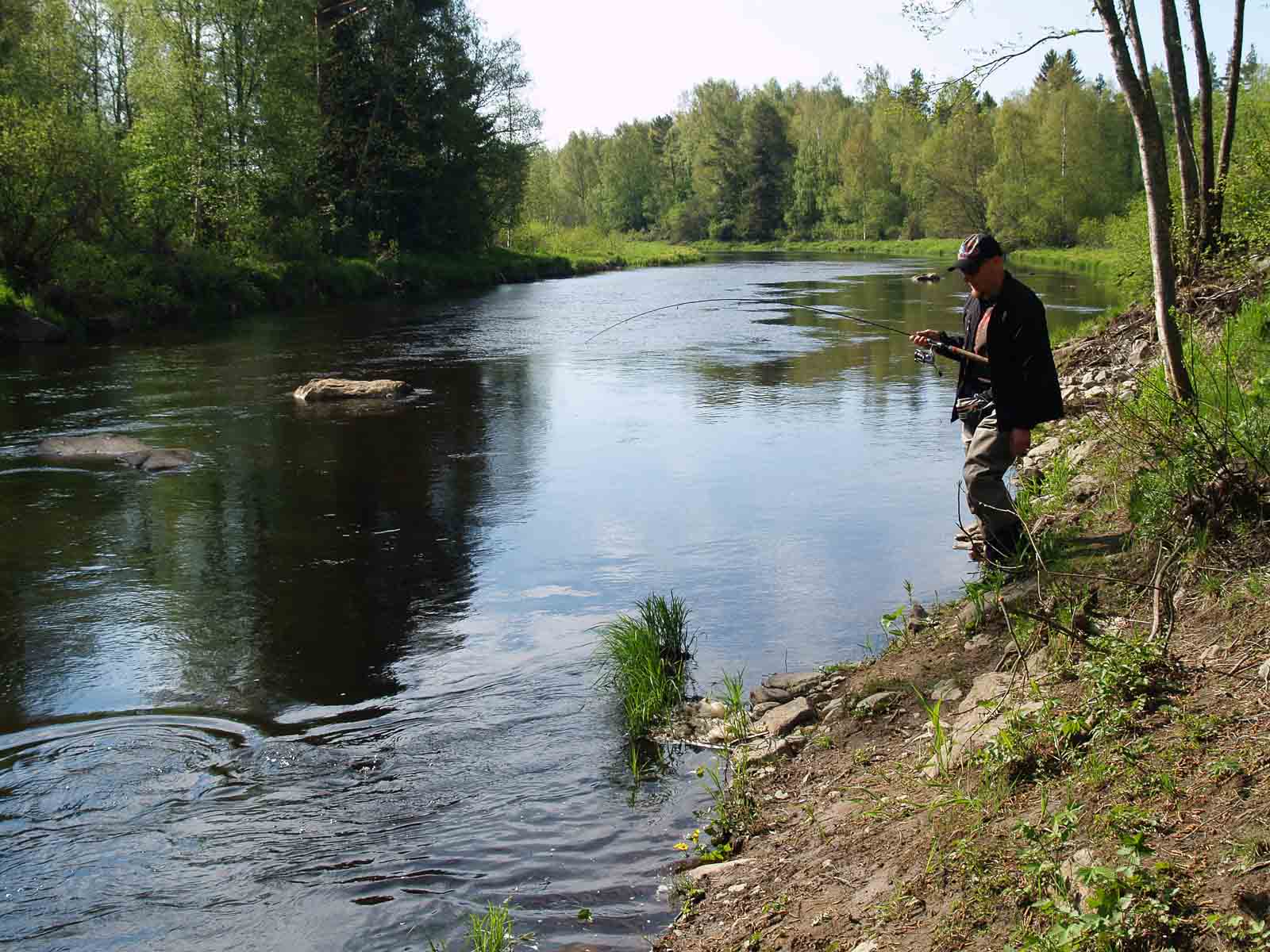
Trout are fished in rivers and lakes, in the sea and inland, by trolling and casting. A slim spoon is a general-purpose lure for almost all conditions—for example, Taimen, Taimen Super, Lätkä, Vuono, Tundra, and Suomi.
Also, the rounder Räsänen gives trout a heavenly dining experience.
Choose a larger spoon when water is high, murky, and cool, when you need to cast far and get the lure swimming deeper. Smaller lures work best for timid, finicky fish in clear, warm water.
Trout also strike eagerly at spinners. Especially in Lapland’s waters and river fishing spots, try to provoke trout with the vibration of Loimu and Balance spinners. Tungsten spinners shine when you need long casts.
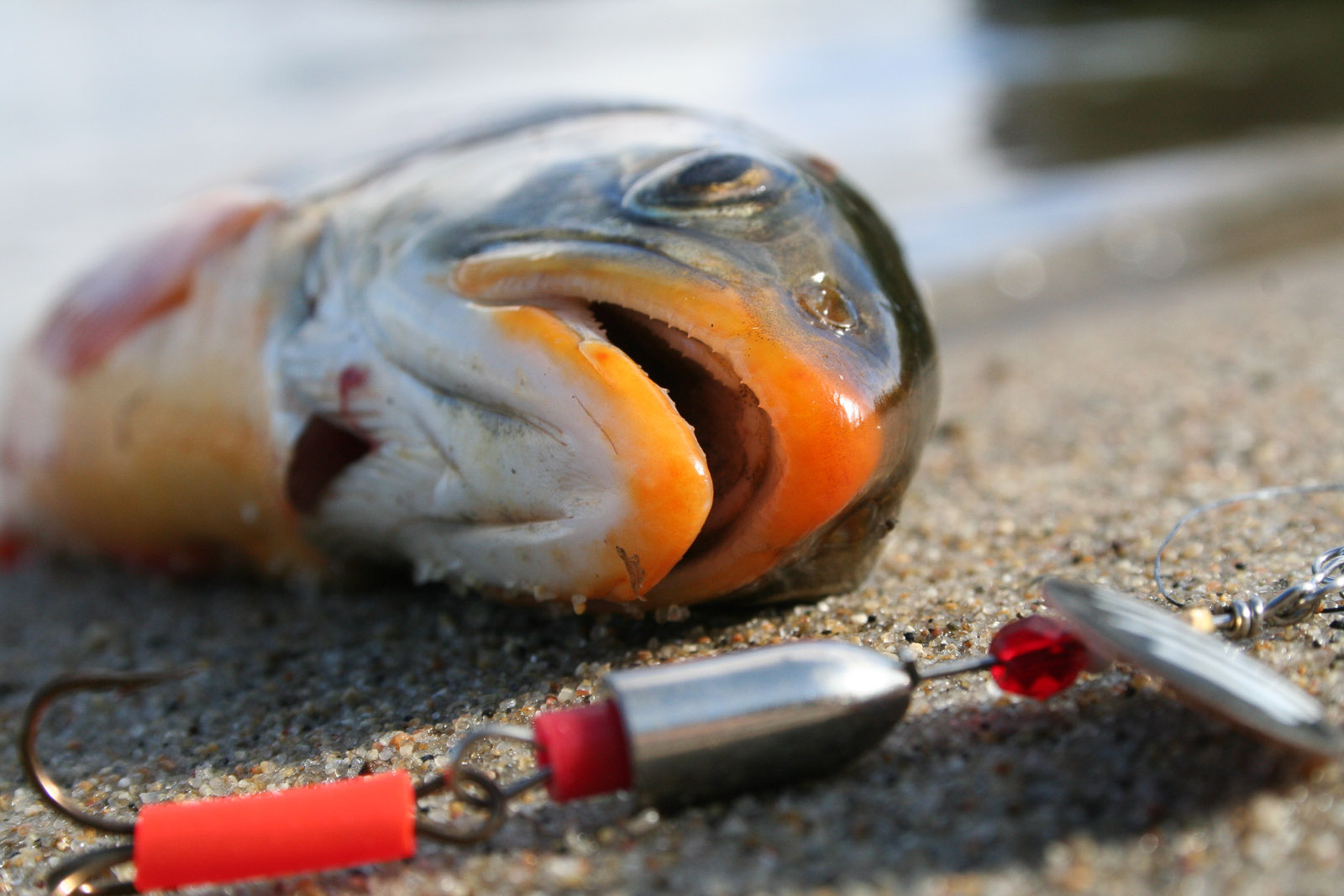
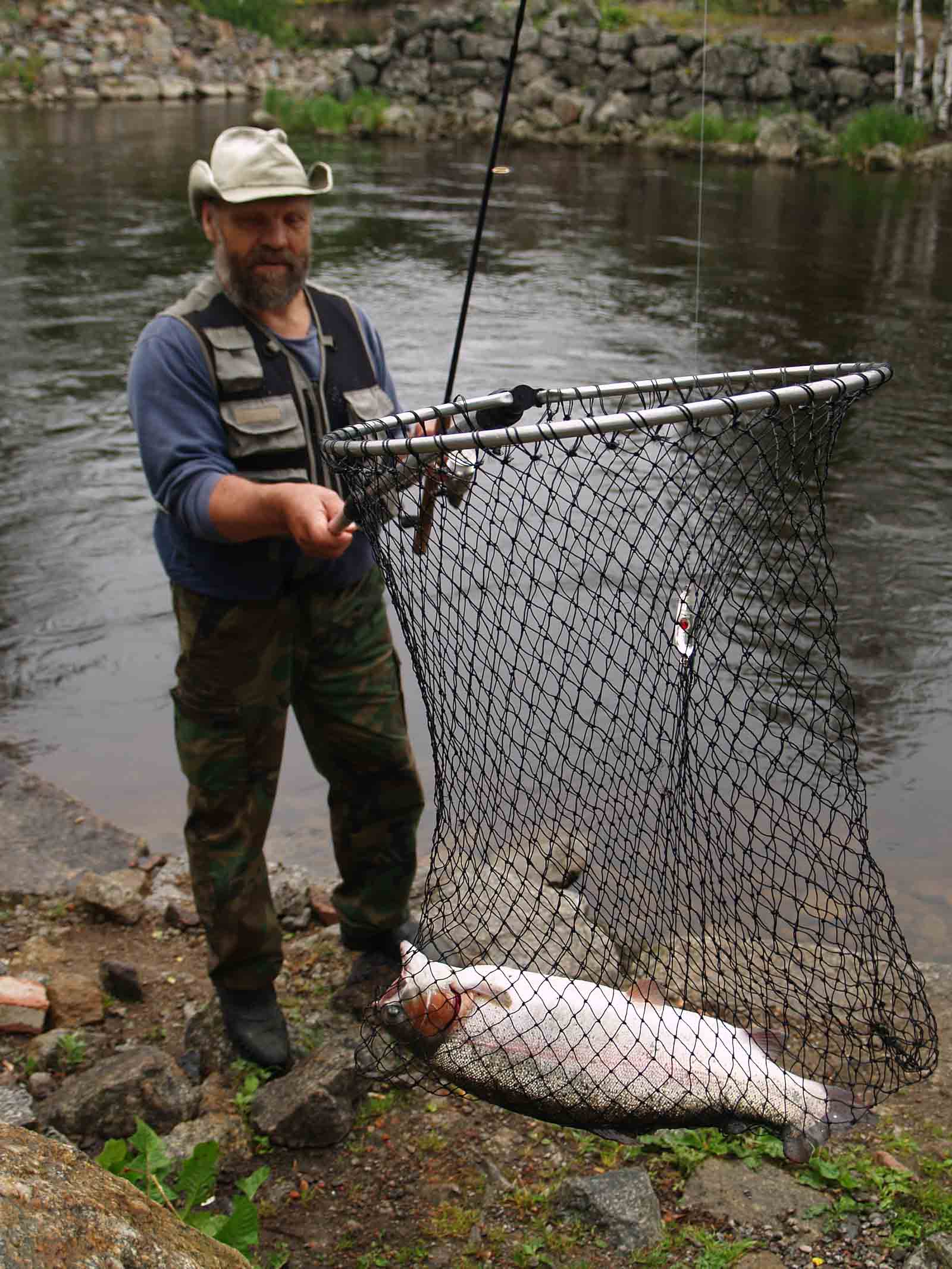
Rainbow Trout Loves Räsänen
Rainbow trout fall for much the same treats as trout, but lures can be slightly smaller.
One of Finland’s most popular rainbow catchers is the 5 cm Räsänen. Some say, if you’ve got a selection of them in different colors, you don’t need anything else.
But fishing loses some interest if you always use the same lure. So, supplement your tackle box with Lätkä, Professor 3 Onega, a smaller Kuha, and a few spinners like Volframi, Kuf, Loimu, and Paavo.
Even the Super-Survari, better known as an ice jig, can surprise positively when used as a casting lure fished jig-style.
Delicacies for Grayling
Small spinners with thin line are perfect for this species. A colorful strike point, such as a feather tuft tied to the hook, increases attraction.
If Paavo, Loimu, Kuf, or Volframi doesn’t work, the grayling truly isn’t hungry.
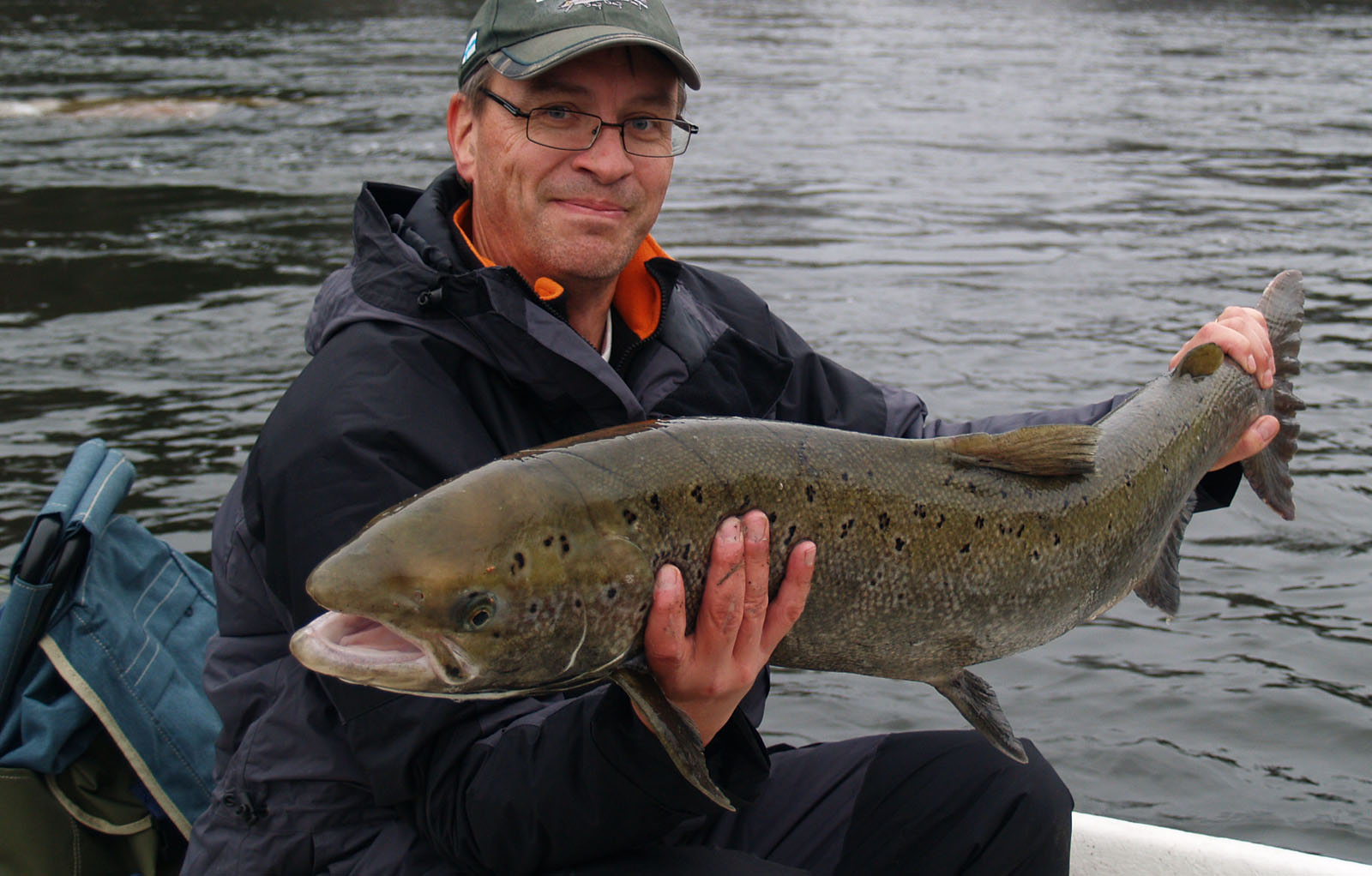
Arctic Char Snacks
The beautiful char of barren waters rarely grows big in its mountain ponds, so smaller lures are also best for it. The spinners already mentioned for rainbow trout and grayling also tempt char, along with spoons around 5–7 cm.
Because shallow char lakes sometimes require very long casts, equip your reel with thin braided line. Then you can try reaching open waters with a 70 mm, 25 g Lätkä. If shoals cruise closer, the 5 cm Räsänen or 55 mm Lätkä are top-class weapons.
Salmon Loves Spoons
Salmon is a magnificent target when it enters rivers on its spawning run. The king of fish doesn’t eat during this journey, but fortunately still strikes at various lures.
There are many theories and stories about the best lures, but don’t make it too complicated. The most important thing is to get the lure where the fish are, swimming more or less properly in their field of vision. Then you can just wait for the strike, gripping the rod tightly.
Most casting anglers trust spoons, like the Räsänen Seiska. Another Kuusamo classic, Professor, though usually thought of as a pike lure, can also produce fine salmon strikes in 75 or 90 mm sizes. Not to mention Lätkä, Kruunu, Tundra, or Taimen.
When salmon fishing, remember: in high, cold, murky water, offer larger and brighter lures; in summer water, use smaller, more subdued ones. And don’t forget to try a spinner for summer salmon, for example Balance.
Text and photos: Jari Tuiskunen, Erä magazine’s fishing expert