





Chasing Perch
Forest ponds are the best places for shore-bound anglers to get acquainted with perch. Almost every pond holds plenty of spiny-backed fish, and a little thinning does the stock good. It’s not at all uncommon for a proper hump-backed bruiser to strike among the dinks—a fish long since dismissed from the nursery.
Kick off the pond project at home with a map. Look for waters with little cottage or other settlement around them, and with banks that aren’t so boggy they block access to the waterline. It’s also a good sign if there’s no track leading to the shore—the fishing pressure is likely low.
For a pond trip, a spinning angler packs—besides rubber boots—a light rod with a small spinning reel spooled with, say, 0.15 mm braid. Avoid the thinnest lines; brush and weeds sometimes demand a firm pull to free lures. At around 0.15 mm, braid already has over five kilos of breaking strength.
As for lures, choose small, quick-starting spinners like Kuf, Loimu, and Paavo. They’re easy to cast and need no fancy retrieve—just a steady, unhurried crank, preferably nearer the bottom than the surface.
Thanks to their spinning blades, spinners slip neatly through stiff weeds and submerged wood and snag far less than spoons or plugs. And perch love them like kids love candy.
Spinners fitted with small softbait minnows are also excellent perch takers—the Kuusamo softbait spinner in 9 g is a good example. Pike can’t resist this setup either, so in pikey waters use a leader to insure your lure.
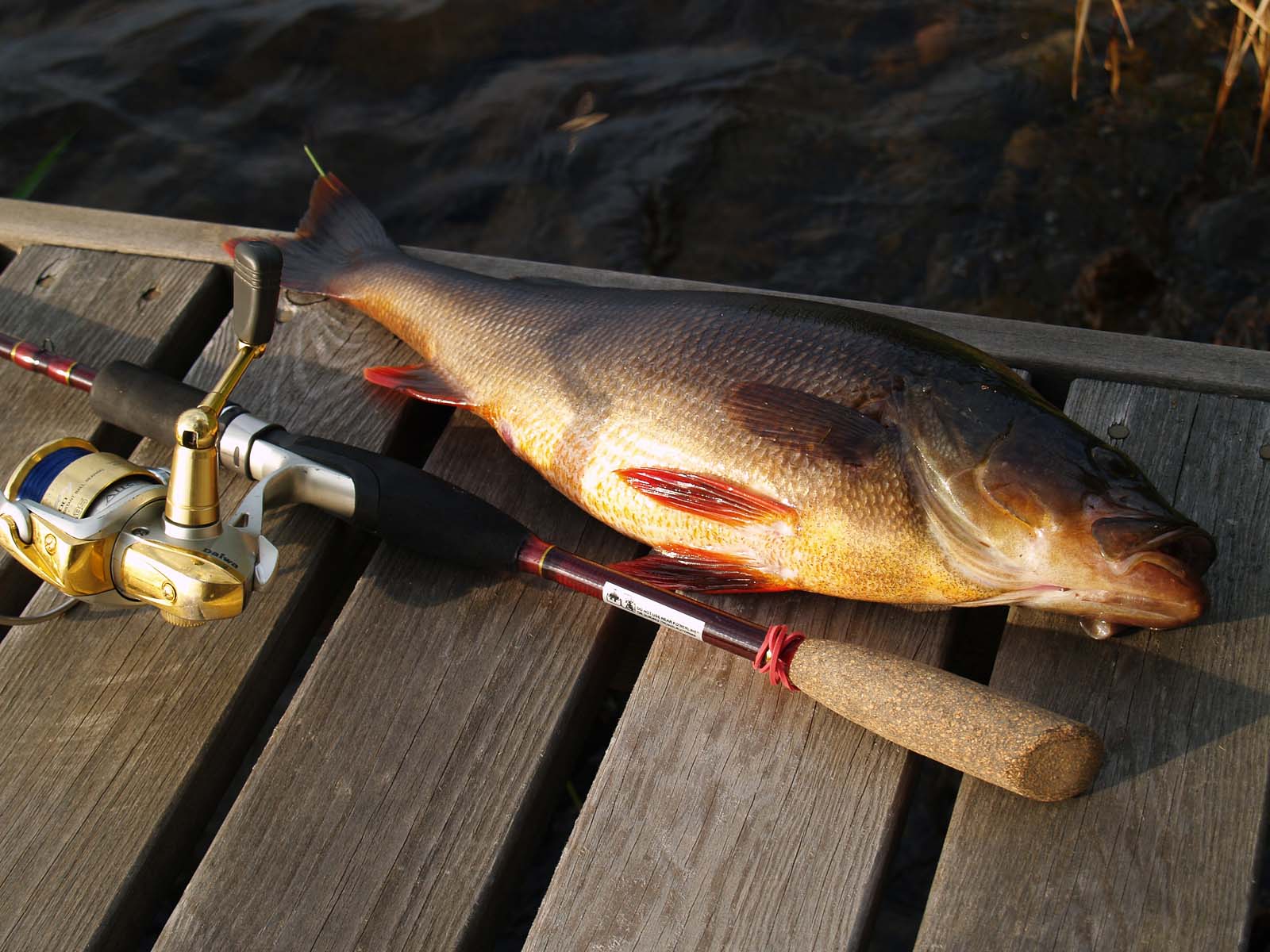
In forest ponds it’s crucial to recognize perch’s sometimes surprising hangouts. The most common rookie tactic—heaving a cast as far as possible toward the middle—rarely works. Depending on the pond, you might not get a single strike all day, even on a great spot.
Perch usually school in the productive shoreline zone, especially where there’s moderate depth plus cover from weeds and brush. It’s much smarter to make short, accurate presentations into gaps in the vegetation and, where depth allows, little parallel pitches right along the bank.
Perch can hold within a rod’s length of you and startle you with a last-second strike. Slow your retrieve as you near shore—there may be a curious school following, spines up, ready to pounce on the wobbler. In dark water they’re hard to see, so stay sharp.
I’ve sometimes taken great perch catches by “ice-jigging” from shore. It sounds odd, but on forest ponds it works surprisingly often.
Hang a small balance jig—or a large Kirppu mormyshka (baited with, say, a perch eye)—from your spinning line. Lower it with the rod tip into edges along the bank, gaps in vegetation, beside submerged logs, and other places hard or impossible to reach by casting but where perch love to lurk. Season with tiny twitches. Now you’re talking.
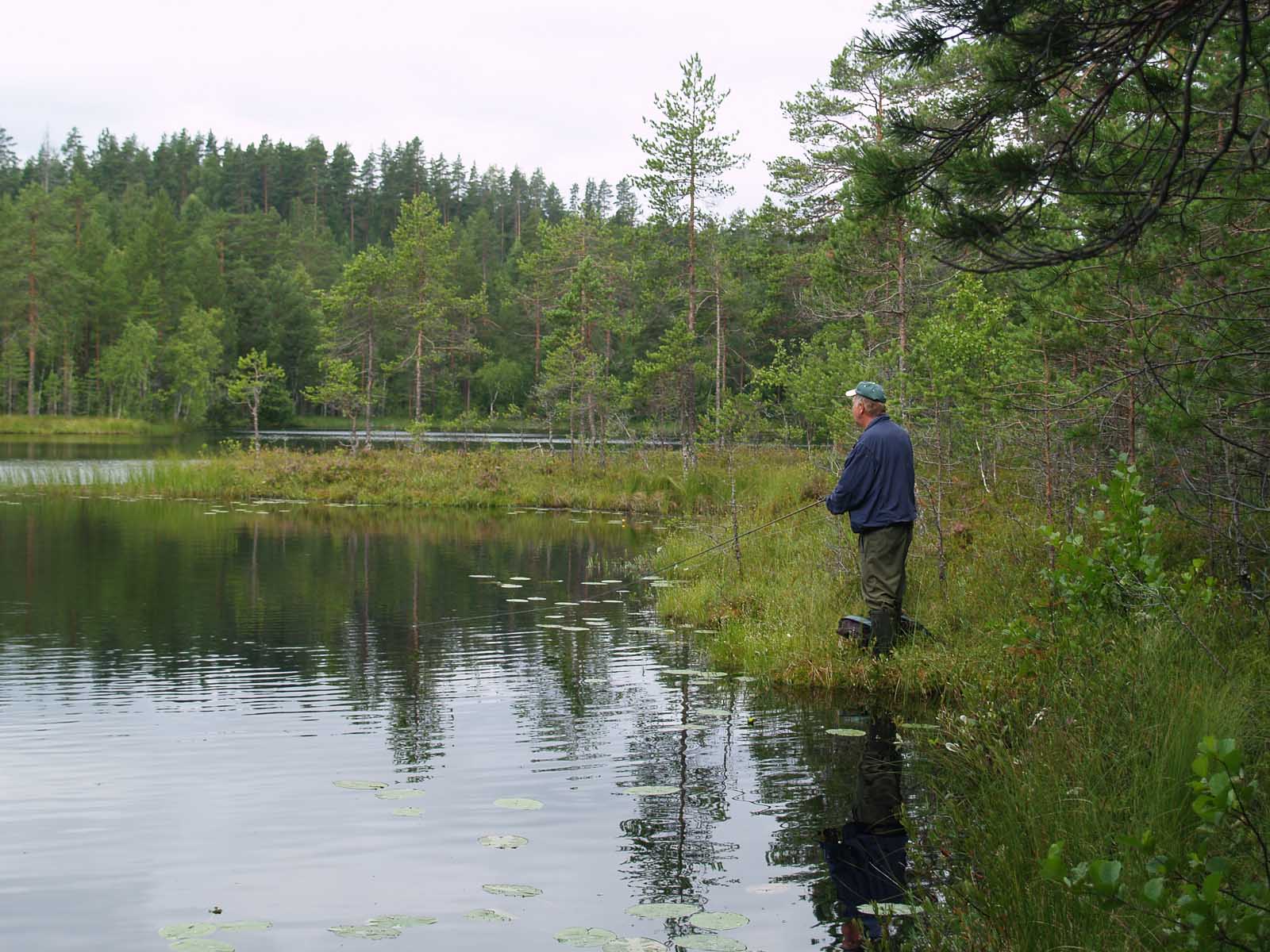
Shore anglers can also enjoy frying-sized perch on larger lakes and along the coast, especially in the warm months. Many perch hunt near shore then—around reefs, points, reed edges—anywhere suitable baitfish gather. They’ll greedily hit an angler’s offerings.
Come autumn, things change: shores empty—of summer people and perch alike. The former retreat to cities; the latter school up on open waters along edges and slopes, far beyond a bank caster’s reach.
Shore-bound anglers should then seek current narrows and swift channels in big waterways. Some of these fish like vending machines from summer into late fall. Many are easy to access too—bridges are often built right over such bottlenecks.
Harbors are another easy option: long piers expand your casting sector nicely. Try pier-jigging; who knows, a school of big ones may be parked under the planks in the shade, waiting for a Kirppu tipped with a worm scrap.
Rapids are a case unto themselves. While people mostly target salmonids there, there are often more perch—both in numbers and biomass—under the surface.
In the peak of summer heat, focus on the tailouts and edge holes of rapids, where hump-backed perch school—they’re far more cooperative than noble salmonids then. As waters cool, the red-fleshed fish take their turn.
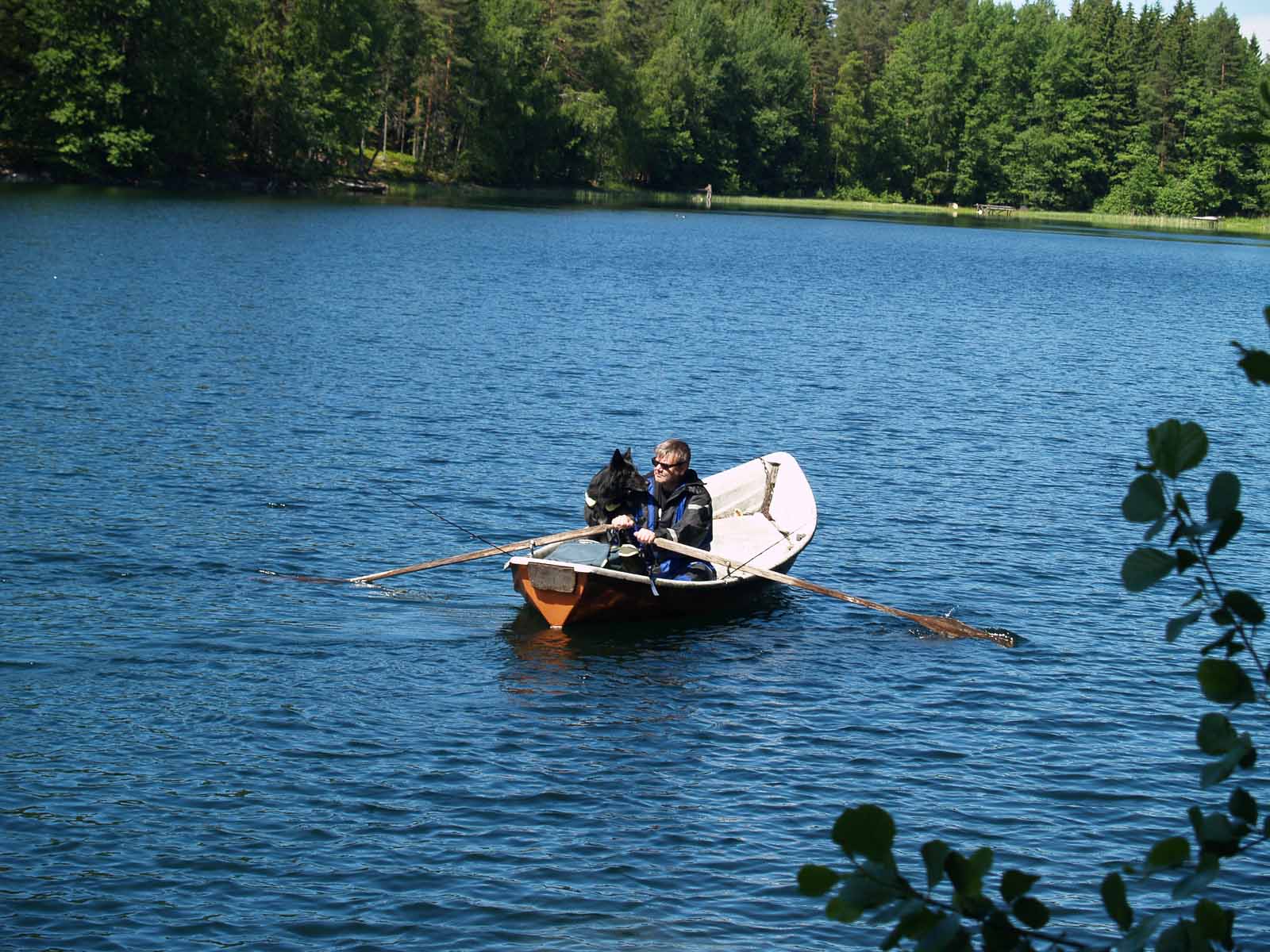
On big waters, boat owners have a clear edge over shore anglers. Equipped with sonar and charts—nowadays often a chartplotter—an angler will find perch schools if they’re willing to search. In autumn the schools can be dense, and catches phenomenal on the right day.
Most often, open-water perch are tempted with jigs or vertical jigs—these are the lure types that reach deep schools. But not always. On some lakes and sea areas, surface blitzes are common.
Surface commotion—and often a flock of gulls wheeling above—gives away the spot without electronics. Get a lure in there and you won’t wait long for a thump! For blitzing perch, small spinners, plugs, and other shallow runners shine—don’t forget lightly weighted jigs either.
Summer row-trolling with a tiny spinner or plug is both fun and deadly for perch. Use a soft rod and very thin line—say 0.08–0.10 mm braid. Weeds aren’t much trouble when trolling slowly, and thin line always swims small lures livelier than thick.
Row lazily along reef edges, skimming rocky and reedy shores, and occasionally check the open water for big bruisers pushing bait to the top. When you hook one, stop and cast the area for a bit, then resume rowing. Cleaning duty awaits!
Text and photos: Jari Tuiskunen, Fishing Expert at Erä Magazine